Omega 3 and fish oil benefits: what the biggest trials found
In a trial of 25,871 adults, fish oil did not lower heart attacks, strokes and heart deaths overall. What omega 3 does, its side effects, and what works better.
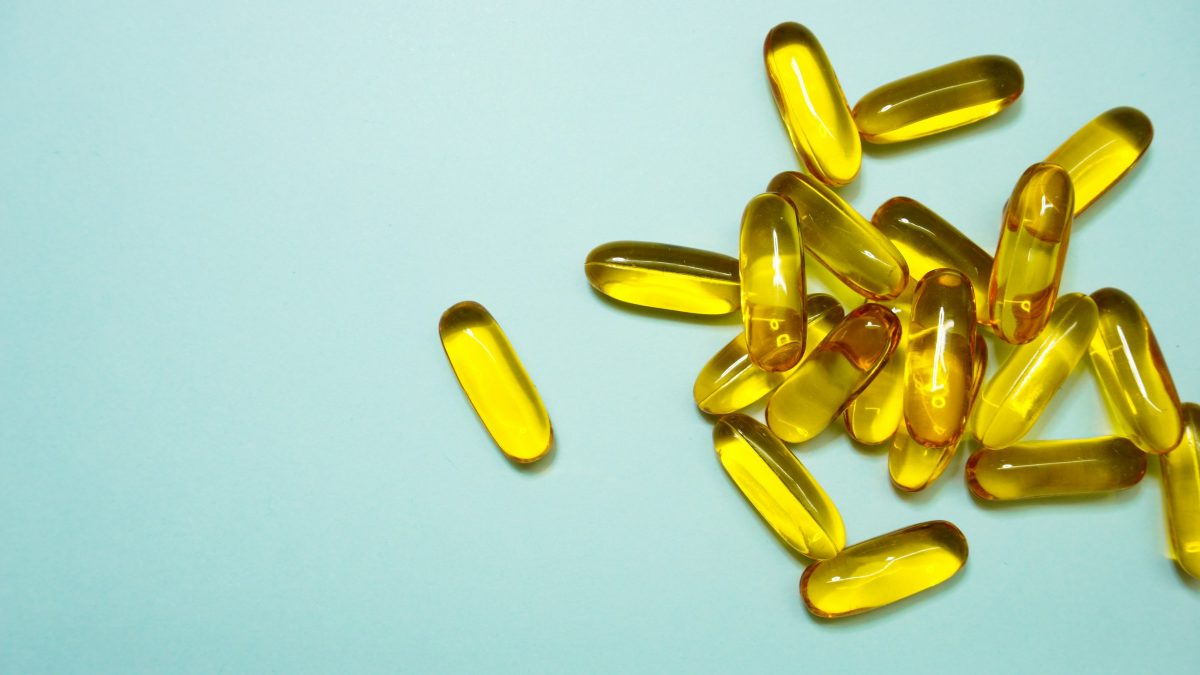
Many people take fish oil for their heart. The largest trial of it in healthy adults found no drop in heart attacks, strokes and heart deaths taken together, and a pooled look at seven trials found a higher risk of an irregular heartbeat. Omega 3 still has a place, and the studies show fairly clearly where it helps and why fish on the plate keeps beating fish oil in a capsule.
What are omega 3s, and where do they come from?
Omega 3s are a family of fats. Two of them, EPA and DHA, are found in seafood, especially cold-water fish such as salmon and mackerel, and in fish oil supplements. A third, ALA, comes from plants: flaxseed, soybean and canola oils, chia seeds and walnuts.1

Fish liver oils, such as cod liver oil, carry EPA and DHA too, along with vitamins A and D, in amounts that vary from product to product. Both vitamins can be harmful in excess.1 Fish oil and cod liver oil are different products, and the label tells you which one you are holding.
Does fish oil protect your heart?
Not in healthy adults, going by the largest trial. VITAL gave 25,871 American adults, men from 50 and women from 55, an omega 3 capsule or a placebo for a median of 5.3 years. Heart attacks, strokes and heart deaths taken together came to 386 on omega 3 and 419 on placebo, a gap too small to rule out chance.2
Heart attacks on their own were about 28% fewer on omega 3, but that was one of the trial’s secondary results, which researchers treat as a lead to follow rather than an answer. Cancer was no lower either: 820 cases against 797.2
The picture changes for people who already have heart disease or high triglycerides, where there is some evidence of benefit, and a 2020 review of 23 studies found that EPA and DHA lower triglycerides by about 15%.1 Triglycerides sit on the same blood test as cholesterol; here is what each number on that test means. Prescription omega 3 medicines also exist for very high triglycerides, and whether one suits you is a question for your doctor.1
Fish oil side effects, and the heart rhythm risk
Most side effects are mild: an unpleasant taste, bad breath, sweat that smells, headache, heartburn, nausea and diarrhoea.1 The one worth knowing about is atrial fibrillation, an irregular heartbeat. A 2021 analysis pooled seven large heart trials of 81,210 people, average age 65, followed for about five years. Those given marine omega 3 had a 25% higher risk of it, and the risk was greater in the trials that tested more.3
25%
higher risk of atrial fibrillation, an irregular heartbeat, in people given omega 3 supplements across seven heart trials of 81,210 people.
Gencer and colleagues, Circulation, 20213
A 2024 study of the UK Biobank followed 415,737 people aged 40 to 69 for about 12 years. Among those without heart disease, regular fish oil users were 13% more likely to develop atrial fibrillation and 5% more likely to have a stroke. Among those who already had heart disease it went the other way: users with atrial fibrillation were 15% less likely to go on to a heart attack, and those with heart failure 9% less likely to die.4
That study watched people rather than testing fish oil, so it shows a link, not a cause. Still, the same capsule may help one person and not another. If you have a heart condition or take any medicine, ask your doctor or pharmacist whether fish oil suits you.
Does omega 3 slow ageing?
A little, in one trial. DO-HEALTH enrolled generally healthy, active adults aged 70 and over in five European countries. In 777 of them, researchers read DNA methylation clocks, blood measures that estimate how fast the body is ageing, at the start and after three years.5
Omega 3 alone slowed three of the four clocks, by about 2.9 to 3.8 months over the three years, and omega 3, vitamin D and exercise together did better still on one of them. The authors wrote that their trial “indicates a small protective effect of omega-3 treatment on slowing biological aging over 3 years”.5 This was a later analysis of the trial, and it did not measure whether anyone lived longer. One author works for Altos Labs, a biotech company, and founded a nonprofit that licenses patents for some of these clocks.5
Does omega 3 help dry eyes and low mood?
For dry eyes, the best trial says no. DREAM gave 535 people with moderate to severe dry eye a fish oil supplement or an olive oil placebo for a year. Symptom scores fell by 13.9 points on fish oil and 12.5 on placebo, a difference too small to count.6
For depression, a 2021 review of 35 studies concluded that if omega 3 has an effect, it may be too small to matter, and rated the evidence low or very low.1 Depression can be serious, and if you think you or someone close to you has it, a doctor is the right first call.1
Can a blood test show your omega 3 level?
Yes, and blood levels are behind some of the most hopeful findings. A 2021 analysis pooled 17 studies that measured omega 3s in the blood of 42,466 people and followed them for a median of 16 years. Those in the top fifth for EPA, DHA and a related fat, DPA, had a 15 to 18% lower risk of death than those in the bottom fifth.7
People who eat more seafood tend to live more healthily in other ways too, so a finding like this cannot show that omega 3 itself did the work.1 The lead author owns stock in OmegaQuant, a lab that offers blood fatty acid testing.7 Tests sold as an omega 3 index measure EPA and DHA in red blood cells. If you want to know yours, a doctor can tell you whether it is worth having and how to read it beside your other results.
Omega 3 foods or fish oil capsules: which is better?
Food has the stronger evidence. For some conditions the case for eating seafood is stronger than the case for omega 3 supplements, perhaps because fish brings other nutrients, takes the place of less healthy foods, or goes with healthier habits.1
The NHS advises at least two portions of fish a week, one of them oily, with a portion being about 140g. Oily fish include salmon, sardines, mackerel, herring, trout, pilchards and sprats, while fresh and canned tuna do not count.8 Girls, women who are planning a pregnancy or may have a child one day, and women who are pregnant or breastfeeding are advised to have no more than two portions of oily fish a week, because of the pollutants oily fish can carry.8

If you buy capsules, the label is mostly honest. A New Zealand study tested 10 popular fish oils: nine held within 10% of the EPA and DHA on the label, and no sample had detectable mercury. But fewer than a third would deliver every benefit claimed on the label, even at the highest number of capsules suggested.9
Freshness varies more. Of over 1,900 fish oil samples in a testing database, 13.9% were above the limit for peroxides, an early sign of oxidation, and 8.8% above the limit for total oxidation. Most met the guidelines, and the authors, who work for a testing firm, an omega 3 industry body and a supplement maker, concluded as much.10
Before you buy your next fish oil
- Aim for two portions of fish a week, one of them oily, as the NHS suggests
- Count salmon, sardines, mackerel, herring and trout as oily fish, but not tuna
- Check whether the bottle is fish oil or fish liver oil, which also carries vitamins A and D
- Look for the EPA and DHA in each capsule, not just the total amount of oil
- Ask your doctor or pharmacist first if you have a heart condition or take any medicine
- Ask about an omega 3 blood test if you want a number of your own to follow
Sources
- National Center for Complementary and Integrative Health. Omega-3 supplements: what you need to know. Last updated November 2024. nccih.nih.gov/health/omega3-supplements-what-you-need-to-knowChecked 19 November 2026Back to the text
- Manson JE, Cook NR, Lee IM, et al. Marine n-3 fatty acids and prevention of cardiovascular disease and cancer. New England Journal of Medicine. 2019;380(1):23-32. pubmed.ncbi.nlm.nih.gov/30415637/Checked 19 November 2026Back to the text
- Gencer B, Djousse L, Al-Ramady OT, et al. Effect of long-term marine omega-3 fatty acids supplementation on the risk of atrial fibrillation in randomized controlled trials of cardiovascular outcomes: a systematic review and meta-analysis. Circulation. 2021;144(25):1981-1990. pubmed.ncbi.nlm.nih.gov/34612056/Checked 19 November 2026Back to the text
- Chen G, Qian ZM, Zhang J, et al. Regular use of fish oil supplements and course of cardiovascular diseases: prospective cohort study. BMJ Medicine. 2024;3(1):e000451. pubmed.ncbi.nlm.nih.gov/38800667/Checked 19 November 2026Back to the text
- Bischoff-Ferrari HA, Gängler S, Wieczorek M, et al. Individual and additive effects of vitamin D, omega-3 and exercise on DNA methylation clocks of biological aging in older adults from the DO-HEALTH trial. Nature Aging. 2025;5(3):376-385. pubmed.ncbi.nlm.nih.gov/39900648/Checked 19 November 2026Back to the text
- Dry Eye Assessment and Management Study Research Group; Asbell PA, Maguire MG, et al. n-3 fatty acid supplementation for the treatment of dry eye disease. New England Journal of Medicine. 2018;378(18):1681-1690. pubmed.ncbi.nlm.nih.gov/29652551/Checked 19 November 2026Back to the text
- Harris WS, Tintle NL, Imamura F, et al. Blood n-3 fatty acid levels and total and cause-specific mortality from 17 prospective studies. Nature Communications. 2021;12(1):2329. nature.com/articles/s41467-021-22370-2Checked 19 November 2026Back to the text
- NHS. Fish and shellfish. Page last reviewed 26 June 2026. nhs.uk/live-well/eat-well/food-types/fish-and-shellfish-nutrition/Checked 19 November 2026Back to the text
- Rucklidge JJ, Shaw IC. Are over-the-counter fish oil supplements safe, effective and accurate with labelling? Analysis of 10 New Zealand fish oil supplements. New Zealand Medical Journal. 2020;133(1522):52-62. pubmed.ncbi.nlm.nih.gov/32994616/Checked 19 November 2026Back to the text
- De Boer AA, Ismail A, Marshall K, et al. Examination of marine and vegetable oil oxidation data from a multi-year, third-party database. Food Chemistry. 2018;254:249-255. pubmed.ncbi.nlm.nih.gov/29548449/Checked 19 November 2026Back to the text
Photos: Leohoho, Caroline Attwood, Towfiqu barbhuiya / Unsplash
This article is general information, not medical advice. For a question about your own health, your doctor or pharmacist is the right person to ask.