High-fibre foods: how much you need and where to find it
Most adults eat about 20 g of fibre a day against the 30 g advised. What the largest review found, which foods carry it and how to add more without bloating.
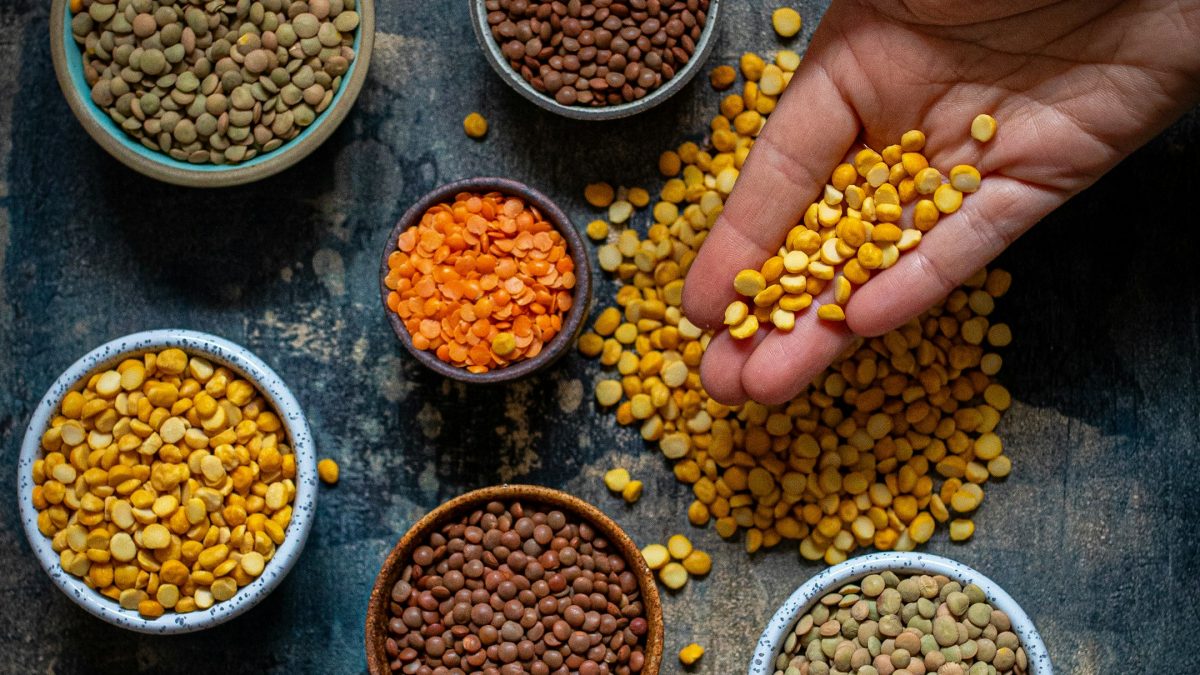
Fibremaxxing, piling as much fibre into every meal as you can, has turned into a social media trend, and for once the research is mostly on its side. Few people are anywhere near overdoing it: most adults in the UK eat about two thirds of the fibre they are advised to.1
How much fibre do you need a day?
The NHS sets the target for adults at 30 g a day and says most adults average about 20 g. Children need less, though most of them fall short too:1
| Age | Fibre a day |
|---|---|
| 2 to 5 | about 15 g |
| 5 to 11 | about 20 g |
| 11 to 16 | about 25 g |
| Adults | 30 g |
Young people aged 11 to 18 average about 16 g a day.1 In Europe, the European Food Safety Authority considers 25 g a day enough for normal bowel function in adults.3
What the largest review of fibre found
In 2019 a team led by Andrew Reynolds at the University of Otago in New Zealand, in work partly funded by the World Health Organization, pooled 185 prospective studies, about 135 million person-years of follow-up, and 58 clinical trials with 4,635 adults.2
People who ate the most fibre had 15 to 30% lower death rates, from all causes and from cardiovascular disease, than those who ate the least. They also had less coronary heart disease, stroke, type 2 diabetes and bowel cancer. In the trials, more fibre went with lower bodyweight, systolic blood pressure and total cholesterol.2
15 to 30%
lower death rates, from all causes and from cardiovascular disease, in people who ate the most fibre compared with those who ate the least.
Reynolds and colleagues, The Lancet, 20192
The benefit was greatest at 25 to 29 g a day, and the authors wrote that higher intakes could protect even more.2 Most of these figures come from observational studies, which show that people who eat more fibre tend to be healthier but cannot prove fibre alone is the reason. The authors rated the certainty of the evidence as moderate.2
Which foods have the most fibre?
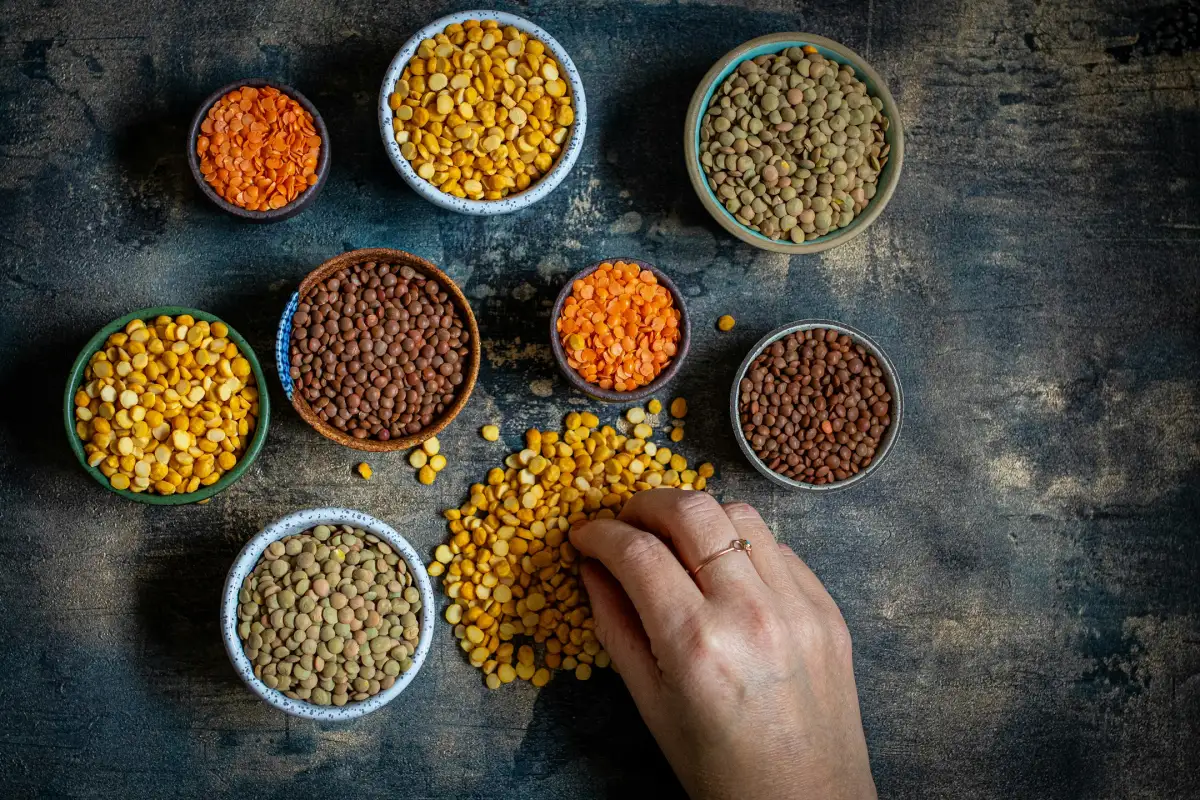
Most of it comes from plants eaten close to whole: beans, lentils and chickpeas, wholegrains such as oats, wholewheat pasta, bulgur wheat and brown rice, potatoes with their skins on, vegetables, fruit, nuts and seeds.1 Beans and lentils carry iron as well, which is worth knowing if your ferritin tends to run low.
The NHS shows how ordinary meals reach the target in a day:1
| Meal | Fibre |
|---|---|
| Breakfast: 2 slices of wholemeal toast with peanut butter, then a medium orange | about 8.3 g |
| Lunch: wholemeal spaghetti with a lentil and tomato sauce | about 11 g |
| Dinner: grilled chicken breast, a baked potato in its skin, carrots and green beans | about 11.2 g |
That comes to about 30.5 g before any snack. A small handful of unsalted nuts, some fruit, or crackers with hummus adds more.1
Easy swaps for every day
Swaps the NHS and the BDA suggest
- White bread and pasta for wholemeal, or for a higher-fibre white bread
- Your breakfast cereal for porridge or a plain wholegrain one
- White rice for brown rice or bulgur wheat
- Peeled potatoes for potatoes in their skins
- Beans, lentils or chickpeas stirred into stews, curries, sauces and salads
- Fresh fruit, vegetable sticks, oatcakes or unsalted nuts as snacks
How to add fibre without the bloating
The British Dietetic Association (BDA) advises raising your fibre gradually, so your gut can adjust and you avoid bloating and wind, and drinking plenty of fluid as you go: fibre draws water into the bowel, and without enough to drink you can become dehydrated.4 Variety matters too. The NHS points out that leaning on one type of food may not give you a balanced diet.1
The BDA also suggests seeing a dietitian if you live with constipation or diarrhoea, as with irritable bowel syndrome (IBS), or with a condition that limits how much fibre you can eat, such as inflammatory bowel disease. Some people with IBS find that large amounts of fermentable fibre bring on bloating, wind and diarrhoea.4
Reading the label
On a food label, “high fibre” means 6 g or more per 100 g, and “source of fibre” means 3 g or more per 100 g.4 The NHS adds that the fibre in any food depends on how it is made or prepared, and on how much of it you eat.1
Sources
- NHS. How to get more fibre into your diet. Page last reviewed 2 March 2026. nhs.uk/live-well/eat-well/digestive-health/how-to-get-more-fibre-into-your-diet/Checked 15 November 2026Back to the text
- Reynolds A, Mann J, Cummings J, Winter N, Mete E, Te Morenga L. Carbohydrate quality and human health: a series of systematic reviews and meta-analyses. Lancet. 2019;393(10170):434-445. pubmed.ncbi.nlm.nih.gov/30638909/Checked 15 November 2026Back to the text
- EFSA Panel on Dietetic Products, Nutrition, and Allergies (NDA). Scientific Opinion on Dietary Reference Values for carbohydrates and dietary fibre. EFSA Journal. 2010;8(3):1462. efsa.europa.eu/en/efsajournal/pub/1462Checked 15 November 2026Back to the text
- British Dietetic Association. Fibre: Food Fact Sheet. bda.uk.com/resource/fibre.htmlChecked 15 November 2026Back to the text
Photos: Monika Borys / Unsplash
This article is general information, not medical advice. For a question about your own health, your doctor or pharmacist is the right person to ask.