Raw milk benefits and risks: what the studies show
In US outbreaks, raw milk and cheese caused 840 times more illness than pasteurised dairy. What fans claim, what heat changes, and what is still unknown.
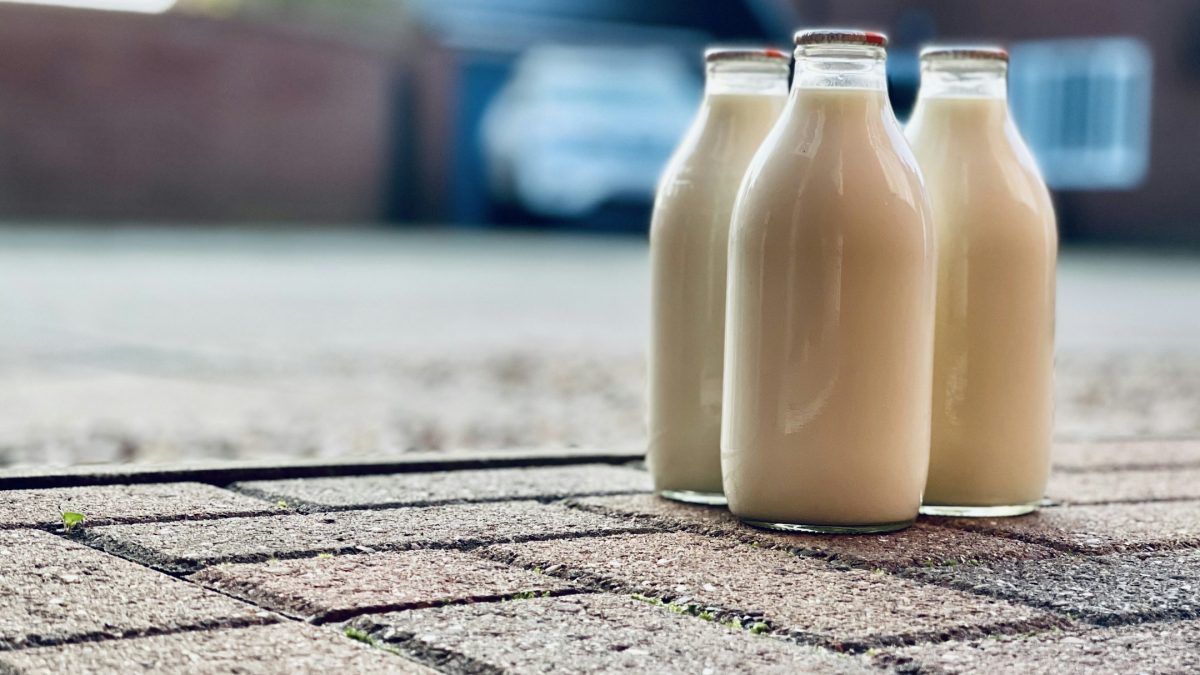
Raw milk has travelled from the farm gate to the phone screen, sold as milk the way it used to be: richer, full of living enzymes and kinder to the stomach. Few Americans drink it, yet from 2009 to 2014 raw milk and cheese caused 96% of the illnesses in US dairy outbreaks.1
Its fans do have a point or two. Heat lowers some vitamins, and children in rural Europe who drink raw farm milk have less asthma. Neither fact makes raw milk the safer or healthier glass, and nobody yet knows why the second one happens.
What is raw milk, and what does pasteurisation do?
Raw milk is milk from a cow, sheep, goat or any other animal that has not been pasteurised.3 Pasteurisation heats milk to a set temperature for a set time, long enough to kill the germs that cause illness.2 The standard methods hold it at 72°C for 15 seconds or at 63°C for 30 minutes.4
The germs it targets include Campylobacter, Cryptosporidium, E. coli, Listeria, Brucella and Salmonella.2 Europe’s food safety authority, EFSA, looked at raw milk from cows, sheep, goats, horses, donkeys and camels. It named Campylobacter, Salmonella, toxin-producing E. coli, Brucella melitensis, Mycobacterium bovis (the cause of bovine tuberculosis) and tick-borne encephalitis virus as the main hazards, with clear links between drinking raw milk and illness from each.10
Is raw milk safe to drink?
Raw milk is far riskier than pasteurised milk. Across US dairy outbreaks from 2009 to 2014, people who drank raw milk or ate raw-milk cheese were about 840 times more likely to fall ill, and 45 times more likely to end up in hospital, than people who chose pasteurised dairy.1
The estimate comes from a 2017 study in Emerging Infectious Diseases, built on 87 outbreaks that caused 750 laboratory-confirmed illnesses and 215 hospital stays. Its authors adjusted for the many cases that never reach a laboratory, then compared the risk per serving.1
840×
more illnesses from raw milk and cheese than from pasteurised dairy, in US outbreaks from 2009 to 2014. Hospital stays were 45 times more common.
Costard and colleagues, Emerging Infectious Diseases, 20171
Pasteurised dairy is not free of risk. In the same study, Listeria illnesses were more often linked to pasteurised cheese than to raw, though that came to about one extra illness a year. Pasteurised products are usually contaminated after the heating, while most raw-milk outbreaks start on the farm.1
Many people buy from a farm they know and trust. Good farm practice lowers contamination, the CDC says, but it cannot guarantee that milk is safe.2 Surveys of bulk milk tanks on US raw milk farms found Salmonella in 4.6% of them and Campylobacter in 4.7%.1 Over a longer stretch, from 1998 to 2018, the CDC counted 202 outbreaks linked to raw milk, with 2,645 illnesses and 228 hospital stays, and for every illness reported, many more go uncounted.3
Who is most at risk from raw milk?
Anyone can fall ill from raw milk, but the CDC names four groups at higher risk of serious illness: children under 5, adults over 65, pregnant women and people with weakened immune systems.2 Most healthy people recover in a short time, though some go on to have lasting, severe or even life-threatening illness.3
Children carry a large part of the burden. Of 675 people who fell ill in US raw milk outbreaks from 2013 to 2018, 325, or 48%, were aged 19 or younger.7
In pregnancy the concern is Listeria, which can cause miscarriage or the illness or death of a newborn, and which can harm the baby even when the mother does not feel sick.3 Food poisoning from raw milk usually means diarrhoea, stomach cramps and vomiting. In rarer cases it leads to Guillain-Barré syndrome or haemolytic uraemic syndrome, which can bring paralysis or kidney failure.2
The CDC also advises against drinking raw milk that carries live bird flu virus (H5N1) in the hope of building antibodies, since it could make you sick.2
Is raw milk healthier than pasteurised milk?
Not in any way that matters much for your diet. A review of 40 studies found that pasteurisation lowers several vitamins, among them B1, B2, C and folate, but milk holds most of these in small amounts, so the effect on its nutritional value was minimal.5 Calcium, protein and fat come through the heat unchanged.4
| In the milk | After pasteurisation |
|---|---|
| Germs such as Salmonella, E. coli and Listeria | Killed3 |
| Calcium | The same amount, absorbed just as well4 |
| Protein | The same quality4 |
| Fat | Essentially unchanged4 |
| Vitamins B1, B2, B12, C, E and folate | Somewhat lower5 |
| Vitamin A | Higher5 |
| Lactose (milk sugar) | Still there, raw or pasteurised4 |
The vitamin worth a second look is B2, riboflavin. Milk is an important source of it, and the review’s authors say the effect of heat on it deserves more study.5 Vitamin C falls by about 15% with pasteurisation, according to the FDA’s review of the research.4
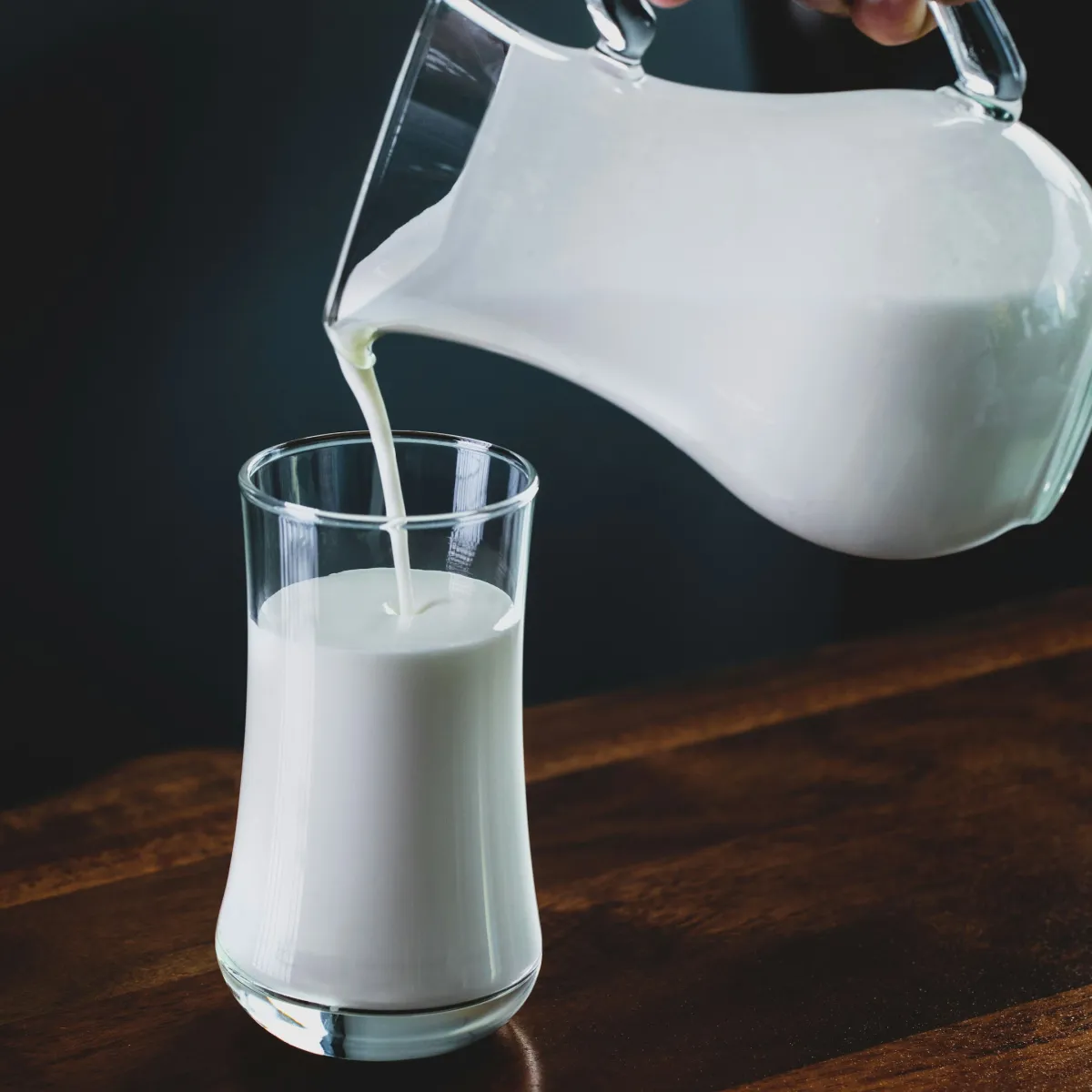
What about the living bacteria and enzymes that fans prize? The FDA notes that the bacteria in raw milk are not probiotics. They come from the udder, the farm and the milking equipment, and a high count is a sign of poor animal health or poor hygiene. Milk’s own enzymes do no work in human digestion either: the stomach and gut break down milk fat and protein with enzymes of their own.4
Does raw milk help with lactose intolerance?
No. In a Stanford trial, 16 adults with confirmed lactose malabsorption drank raw milk, pasteurised milk and soy milk for eight days each, in random order. Their gas, cramps and diarrhoea were no milder on raw milk than on pasteurised milk, and both dairy milks caused more symptoms than soy.6
The claim rests on the idea that raw milk’s bacteria supply lactase, the enzyme that digests milk sugar. Milk has no lactase of its own, raw or pasteurised, and raw milk does not carry the yogurt cultures that help some people digest lactose.4
Can raw milk protect children from asthma and allergies?
Possibly, but nobody has shown it yet. In the GABRIELA study of 8,334 school-age children in rural Europe, those who drank raw farm milk had less asthma, allergic sensitisation and hay fever, even after other farm exposures were taken into account. Boiled farm milk showed no such link.8
Their odds of asthma were 41% lower, and the researchers pointed to the milk’s whey proteins as a possible reason.8 A second study followed 983 babies in rural Austria, Finland, France, Germany and Switzerland through their first year. Those given raw cow’s milk had colds, respiratory infections, ear infections and fevers less often than babies given ultra-heat-treated milk, about 30% less often for infections and fever.9
The team behind it named the catch themselves: “If the health hazards of raw milk could be overcome, the public health impact of minimally processed but pathogen-free milk might be enormous.”9
Both studies are observational: they show a link, and cannot prove the milk caused it. A review that took in six allergy studies saw the same possible link, and warned that other parts of farm life may explain it.5 For anyone who already has a milk allergy, raw and pasteurised milk both trigger reactions.3
Where is raw milk legal, and how can you choose safely?
It depends on where you live. In England, Wales and Northern Ireland, raw cow’s milk may be sold only straight to you, by registered farms at the farm gate, at farmers’ markets or from a milk round, with a health warning on the label. In Scotland its sale is banned.11
Some EU countries allow raw milk in vending machines, and buyers are usually told to boil it before drinking, which would remove the germ risk.10 In the US, the rules change from state to state, and the outbreak figures follow them. Of 74 single-state outbreaks from 2013 to 2018, 58 (78%) happened in states that expressly allowed its sale, and those states had 3.2 times as many outbreaks as states that banned retail sales.7
The three questions worth asking of any health trend work for raw milk too: how many people were studied, compared with whom, and what changed.
Before you pour a glass
- Look for the word “pasteurised” on the label. If it is missing, the milk may be raw.3
- Keep all milk at 40°F (about 4°C) or colder. Pasteurised milk is not safe to leave out of the fridge for long.23
- For a pregnancy, a child under 5, anyone over 65 or anyone with a weakened immune system, the CDC and the UK’s Food Standards Agency advise pasteurised milk and cheese.211
- If you do buy raw milk, bringing it to the boil kills its germs.10
- Raw milk sold for pets is not safe for people.3
- If someone falls ill after raw milk, or you are pregnant and may have had some, see a doctor straight away.3
Sources
- Costard S, Espejo L, Groenendaal H, Zagmutt FJ. Outbreak-related disease burden associated with consumption of unpasteurized cow’s milk and cheese, United States, 2009-2014. Emerg Infect Dis. 2017;23(6):957-64. wwwnc.cdc.gov/eid/article/23/6/15-1603_articleChecked 15 November 2026Back to the text
- Centers for Disease Control and Prevention. Raw milk. Food Safety. Updated 31 January 2025. cdc.gov/food-safety/foods/raw-milk.htmlChecked 15 November 2026Back to the text
- U.S. Food and Drug Administration. The dangers of raw milk: unpasteurized milk can pose a serious health risk. Buy, Store and Serve Safe Food. fda.gov/food/buy-store-serve-safe-food/dangers-raw-milk-unpasteurized-milk-can-pose-serious-health-riskChecked 15 November 2026Back to the text
- U.S. Food and Drug Administration. Raw milk misconceptions and the danger of raw milk consumption. Buy, Store and Serve Safe Food. fda.gov/food/buy-store-serve-safe-food/raw-milk-misconceptions-and-danger-raw-milk-consumptionChecked 15 November 2026Back to the text
- Macdonald LE, Brett J, Kelton D, Majowicz SE, Snedeker K, Sargeant JM. A systematic review and meta-analysis of the effects of pasteurization on milk vitamins, and evidence for raw milk consumption and other health-related outcomes. J Food Prot. 2011;74(11):1814-32. pubmed.ncbi.nlm.nih.gov/22054181/Checked 15 November 2026Back to the text
- Mummah S, Oelrich B, Hope J, Vu Q, Gardner CD. Effect of raw milk on lactose intolerance: a randomized controlled pilot study. Ann Fam Med. 2014;12(2):134-41. pubmed.ncbi.nlm.nih.gov/24615309/Checked 15 November 2026Back to the text
- Koski L, Kisselburgh H, Landsman L, Hulkower R, Howard-Williams M, Salah Z, et al. Foodborne illness outbreaks linked to unpasteurised milk and relationship to changes in state laws, United States, 1998-2018. Epidemiol Infect. 2022;150:e183. pubmed.ncbi.nlm.nih.gov/36280604/Checked 15 November 2026Back to the text
- Loss G, Apprich S, Waser M, Kneifel W, Genuneit J, Büchele G, et al. The protective effect of farm milk consumption on childhood asthma and atopy: the GABRIELA study. J Allergy Clin Immunol. 2011;128(4):766-73. pubmed.ncbi.nlm.nih.gov/21875744/Checked 15 November 2026Back to the text
- Loss G, Depner M, Ulfman LH, van Neerven RJ, Hose AJ, Genuneit J, et al. Consumption of unprocessed cow’s milk protects infants from common respiratory infections. J Allergy Clin Immunol. 2015;135(1):56-62. pubmed.ncbi.nlm.nih.gov/25441645/Checked 15 November 2026Back to the text
- EFSA Panel on Biological Hazards (BIOHAZ). Scientific opinion on the public health risks related to the consumption of raw drinking milk. EFSA J. 2015;13(1):3940. efsa.europa.eu/en/efsajournal/pub/3940Checked 15 November 2026Back to the text
- Food Standards Agency. Raw drinking milk. GOV.UK. Published 9 January 2018. gov.uk/government/publications/raw-drinking-milk/raw-drinking-milkChecked 15 November 2026Back to the text
Photos: Elizabeth Dunne, Eiliv Aceron, Mario Scheibl / Unsplash
This article is general information, not medical advice. For a question about your own health, your doctor or pharmacist is the right person to ask.