Cold shower and ice bath benefits: what the studies found
Ice baths and cold showers are everywhere. What 11 trials found on stress, sleep, inflammation and sick days, and who should take care with cold water.
Ice baths have moved from sports clubs to bathrooms and phone screens, sold as an answer to stress, poor sleep and winter colds. In 2025 a team at the University of South Australia went through the trials to see what the cold actually does in healthy adults. They found real effects, each turning up at its own time, resting on less evidence than the headline numbers suggest.1
What counts as a cold plunge?
The review took in cold showers, ice baths and plunges in water at 15°C or colder, for at least 30 seconds, with the water reaching at least the chest. The studies it found used water between 7 and 15°C, for anything from 30 seconds to 2 hours. Ten tested baths and one tested showers.1
What 11 trials found
The researchers pooled the results by when they were measured, and the timing turned out to matter as much as the cold:1
| Measure | What happened |
|---|---|
| Stress | Lower 12 hours after; no change straight after, or at 1, 24 or 48 hours |
| Inflammation | Up straight after and an hour later |
| Immune function | No change straight after or an hour later |
| Sleep quality | Better |
| Quality of life | Better |
| Mood | No change |
12 hours
after cold water was the one time stress came out lower. Straight after, and at 1, 24 and 48 hours, it was no different.
Cain and colleagues, PLOS ONE, 20251
The authors read the early rise in inflammation as an acute inflammatory response, the body’s immediate reaction to the cold.1
Fewer people than 3,177 suggests
The review covered 3,177 people, but 3,018 of them came from a single trial of cold showers, described below. The other ten studies, all of baths and plunges, had 159 people between them, and every one of them was a man.1
So what the review can say about ice baths rests on small groups of men. The authors say as much themselves: “the current evidence base is constrained by few RCTs, small sample sizes, and a lack of diversity in study populations”.1 The review also took in healthy adults only, so it says nothing about anyone living with a health condition.1
The cold shower trial with 3,018 people
Between January and March 2015, researchers in the Netherlands randomly assigned 3,018 adults aged 18 to 65, none of whom showered cold as a habit, either to end their usual hot shower with 30, 60 or 90 seconds of cold water every day for 30 days, or to shower as normal. After that, the cold groups could carry on as they liked for another 60 days. Of those asked to go cold, 79% kept it up for all 30 days.2
The cold groups reported 29% less sickness absence from work than the group that showered as usual. They did not, though, have fewer days of illness, and no serious side effects linked to the showers were reported.2
So people fell ill about as often, yet took less time off. The absence figures were reported by the participants themselves, who of course knew whether their shower had ended cold.2
Who should take care with cold water
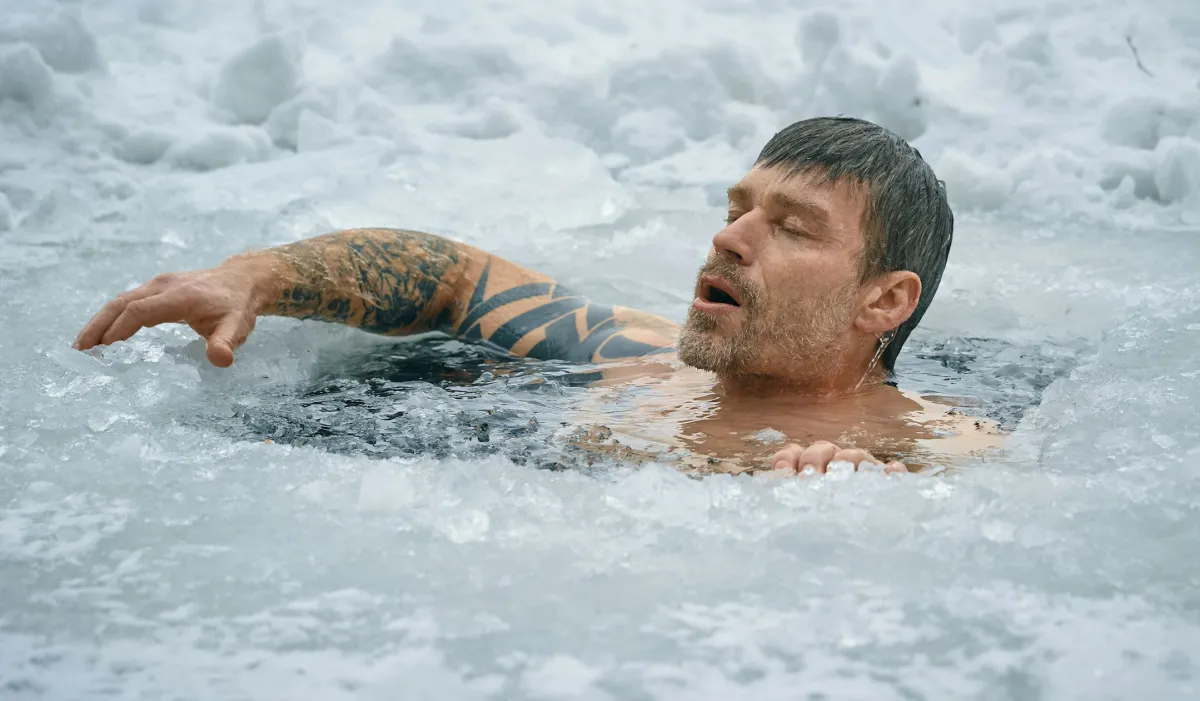
The British Heart Foundation explains that the heart works harder in water, and harder still the colder the water is. Getting into very cold water can cause cold shock: a faster heart rate, higher blood pressure and shortness of breath. Cold water can also lead to hypothermia and raise stress hormones, which increases the risk of abnormal heart rhythms and possibly cardiac arrest.3
Its advice is that anyone with a heart condition should talk to their doctor or nurse specialist before starting. For swimming with a heart condition, it also suggests getting in and out of the water gently and never swimming alone.3
Three questions for any health trend
Three questions worth asking
- How many people were studied, and who were they?
- Was there a comparison group?
- What changed, and when was it measured?
For cold plunges the answers are: mostly small groups of healthy men, yes, and it depends on the hour. If you love your plunge, enjoy it, and know what it can and cannot promise yet.
Sources
- Cain T, Brinsley J, Bennett H, Nelson M, Maher C, Singh B. Effects of cold-water immersion on health and wellbeing: a systematic review and meta-analysis. PLOS ONE. 2025;20(1):e0317615. journals.plos.org/plosone/article?id=10.1371/journal.pone.0317615Checked 15 November 2026Back to the text
- Buijze GA, Sierevelt IN, van der Heijden BC, Dijkgraaf MG, Frings-Dresen MH. The effect of cold showering on health and work: a randomized controlled trial. PLOS ONE. 2016;11(9):e0161749. journals.plos.org/plosone/article?id=10.1371/journal.pone.0161749Checked 15 November 2026Back to the text
- MacArthur C. Cold water swimming: is it bad for your heart? British Heart Foundation, Heart Matters. Published 31 May 2023. bhf.org.uk/informationsupport/heart-matters-magazine/activity/cold-water-swimmingChecked 15 November 2026Back to the text
Photos: Jared Erondu, Vidar Nordli-Mathisen / Unsplash
This article is general information, not medical advice. For a question about your own health, your doctor or pharmacist is the right person to ask.