Ferritin levels: how a normal blood count can hide low iron
Your haemoglobin can be normal while your iron stores run low. What ferritin measures, which cut-offs labs use, and what to ask at your next test.
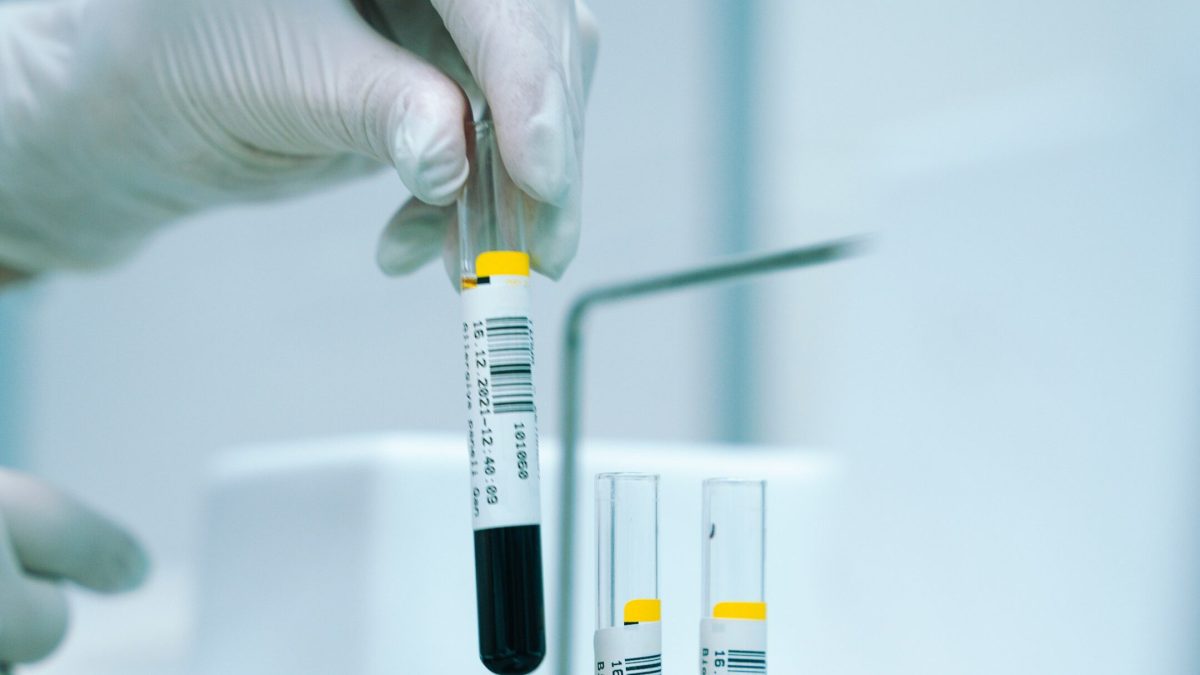
You can be told your blood test is fine and still be short of iron. The full blood count in most check-ups looks at haemoglobin, and haemoglobin is one of the last things to fall when iron runs low. Ferritin shows the problem earlier, but someone has to put it on the form.
Haemoglobin and ferritin measure different things
Haemoglobin is the protein in red blood cells that carries oxygen, and it needs iron to do that. Anaemia is diagnosed when haemoglobin drops below a set level.
Ferritin is the protein that keeps iron in store, and the liver holds most of it. When there is no inflammation, the ferritin in your blood rises and falls with the size of those stores.2 If you take in less iron than you use, your body spends its savings to keep haemoglobin steady, so ferritin falls long before haemoglobin does.
That gap has a name: iron deficiency without anaemia. The stores are low, and the blood count has not caught up yet.
38.6%
of girls and young women aged 12 to 21 in a US study had low iron stores, meaning a ferritin under 25 µg/L.
Weyand and colleagues, JAMA, 20231
What a study of 3,490 young women found
Researchers at the University of Michigan went through US national health survey data collected between 2003 and 2020, covering 3,490 girls and young women aged 12 to 21 with complete results. With a ferritin below 25 µg/L as the line, 38.6% were iron deficient. Iron-deficiency anaemia, the kind a haemoglobin check picks up, affected 6.3%.1
So 83.6% of those low on iron were not anaemic. The US guidance the authors describe recommends anaemia screening for girls and women, which is a haemoglobin check, and their conclusion was that “current screening guidance may miss many individuals with iron deficiency”.1
Which ferritin level counts as low?
It depends on who draws the line, and the chart shows how much that matters: the same blood, read against three cut-offs, gives three very different answers. These are the lines the World Health Organization uses for iron deficiency:2
| Age | Healthy | With an infection or inflammation |
|---|---|---|
| Under 5 | below 12 µg/L | below 30 µg/L |
| 5 and over | below 15 µg/L | below 70 µg/L |
The right-hand column is higher because ferritin also rises with inflammation, and with liver disease and obesity, so a result can look normal while the stores behind it are low.2 Many labs and studies draw their own lines, such as 25 or 30 µg/L, and the range printed next to your result is the lab’s. One more thing that confuses people: µg/L and ng/mL are the same unit written two ways, so 15 µg/L and 15 ng/mL are the same result.
Signs that can point to low iron
The NHS lists these symptoms of iron deficiency anaemia: tiredness and lack of energy, shortness of breath, noticeable heartbeats, paler skin than usual and headaches. Less common ones include ringing in the ears, food tasting strange, itching, a sore tongue, hair loss, craving things that are not food such as ice or paper, trouble swallowing, sores at the corners of the mouth, spoon-shaped nails and restless legs.3
Most of these have plenty of other causes, which is why low iron is confirmed with a blood test rather than a checklist. If several sound familiar, the NHS suggests seeing a GP.3
Iron in food, and a word on tablets
The NHS names liver (best avoided in pregnancy), red meat, beans such as kidney beans, edamame and chickpeas, nuts, dried fruit such as apricots, fortified breakfast cereals and soy flour as good sources of iron. It also says most people can get all the iron they need from a varied, balanced diet.4
Iron tablets are easy to buy and easy to overdo. High doses can cause constipation, nausea and stomach pain, and very high doses can be fatal, especially for children.4 When a test does show low iron, the reason behind it matters as much as the number, and that is a conversation to have with your doctor.
Before your next blood test
Four questions worth asking
- Is ferritin on the form, or only a full blood count?
- Which ferritin level does the lab count as low?
- Could anything be raising my ferritin right now, such as an infection?
- How does this result compare with my last one?
Sources
- Weyand AC, Chaitoff A, Freed GL, Sholzberg M, Choi SW, McGann PT. Prevalence of iron deficiency and iron-deficiency anemia in US females aged 12-21 years, 2003-2020. JAMA. 2023;329(24):2191-2193. pmc.ncbi.nlm.nih.gov/articles/PMC10300696/Checked 15 November 2026Back to the text
- World Health Organization. WHO guideline on use of ferritin concentrations to assess iron status in individuals and populations. Geneva: WHO; 2020. who.int/publications/i/item/9789240000124Checked 15 November 2026Back to the text
- NHS. Iron deficiency anaemia. Page last reviewed 26 January 2024. nhs.uk/conditions/iron-deficiency-anaemia/Checked 15 November 2026Back to the text
- NHS. Vitamins and minerals: iron. Page last reviewed 3 August 2020. nhs.uk/conditions/vitamins-and-minerals/iron/Checked 15 November 2026Back to the text
Photos: Akram Huseyn, Testalize.me / Unsplash
This article is general information, not medical advice. For a question about your own health, your doctor or pharmacist is the right person to ask.