Insulin resistance symptoms, and the tests that find it early
Four in ten young US adults had insulin resistance in a national study, and most never feel it. The signs to know and the blood tests that show it.
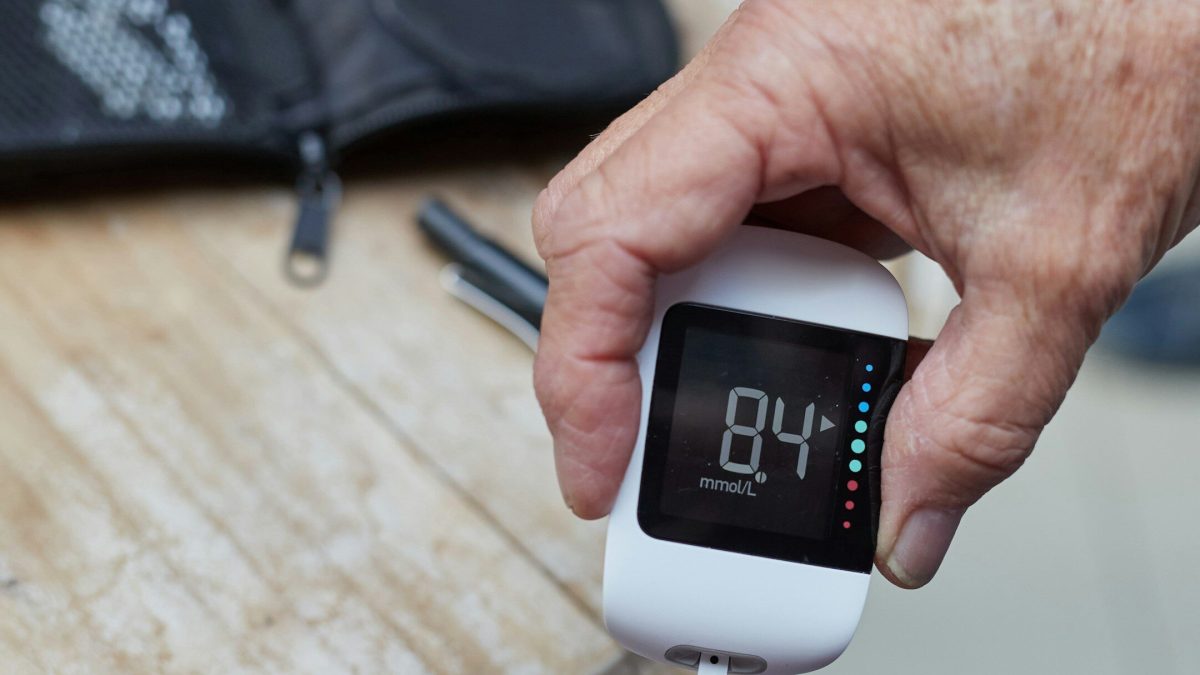
People who search for the signs of insulin resistance usually expect a list. The US National Institute of Diabetes and Digestive and Kidney Diseases (NIDDK) gives a shorter answer: most people have none.1 What shows it is a handful of numbers on an ordinary blood test, and knowing them lets you catch the change while it can still be turned around.
What is insulin resistance?
Insulin resistance means the cells in your muscles, fat and liver do not respond well to insulin, the hormone that lets sugar from your blood into them. Over time the pancreas may not make enough insulin to push the extra sugar in, and blood sugar starts to rise.1
When blood sugar is higher than normal but not high enough to count as type 2 diabetes, that is prediabetes. People with prediabetes have a high chance of developing type 2 diabetes within 5 to 10 years, though not everyone does.1
What are the symptoms of insulin resistance?
Usually there are none. NIDDK says people with insulin resistance and prediabetes usually have no symptoms, and that some people with prediabetes have symptoms like those of diabetes.1
One sign can show on the skin. Acanthosis nigricans is dry, dark, velvety patches, most often in the armpits, on the neck or in the groin, sometimes with tiny skin tags on them. Its most common cause is obesity, and type 2 diabetes and some hormone conditions can cause it too.4 New dark patches are worth showing a doctor.
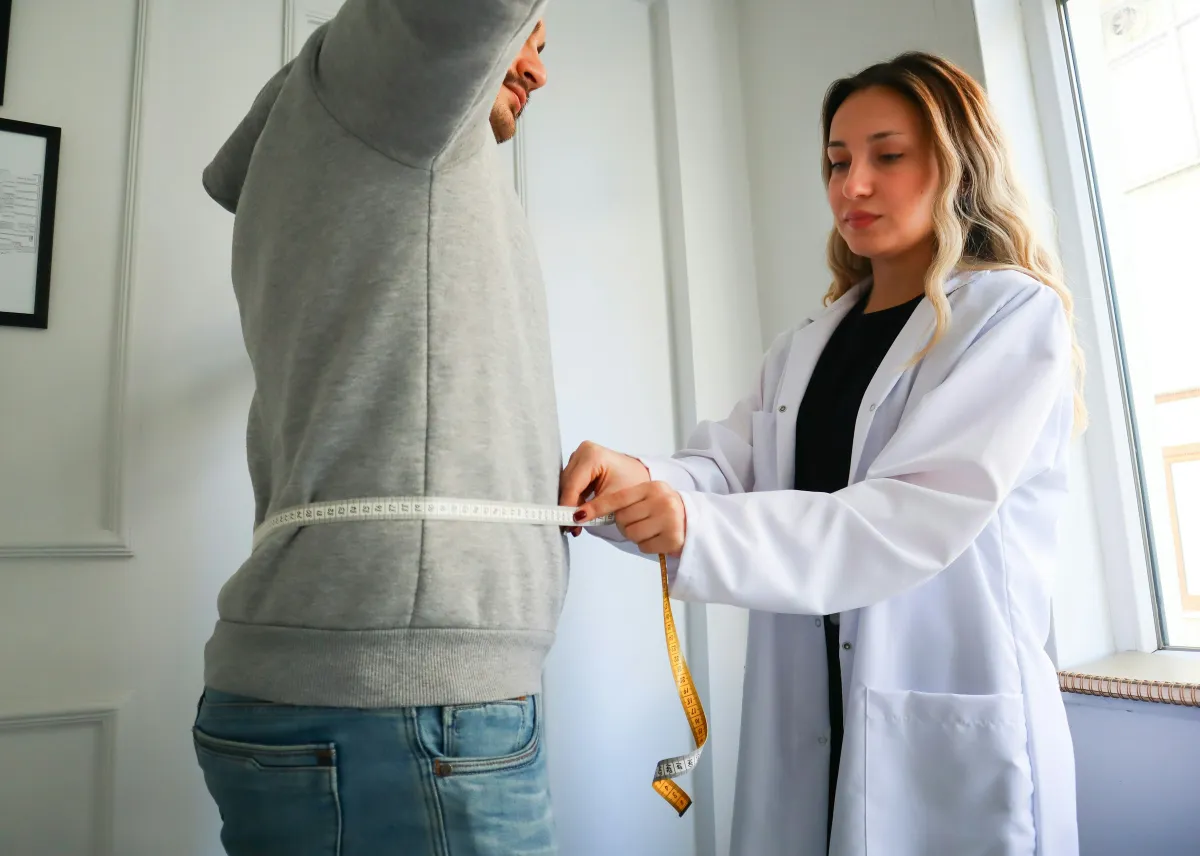
What raises the odds is better known than any symptom: overweight or a large waist, being 35 or older, diabetes in the family, little physical activity, smoking, diabetes during a pregnancy, and conditions such as polycystic ovary syndrome or sleep apnoea.1
How common is insulin resistance?
4 in 10
adults aged 18 to 44 without diabetes had insulin resistance in US national health surveys from 2015 to 2018.
Parcha and colleagues, Journal of Clinical Endocrinology & Metabolism, 20222
Common, and not only in older adults. Using US national survey data on 6,247 adults aged 18 to 44 without diabetes, researchers found insulin resistance in 40.3% in 2015 to 2018, and in 44.8% in 2007 to 2010.2
Those with insulin resistance also carried more of the other risks for the heart. The authors concluded that “screening efforts for IR irrespective of BMI may be required”, IR being insulin resistance and BMI the usual measure of weight for height.2
The Gulf has its own figure. A 2025 review pooled 18 studies of 47,718 Saudi adults and found prediabetes in 24.1%, about one in four: 34.8% of men and 18.7% of women.5
Is there a test for insulin resistance?
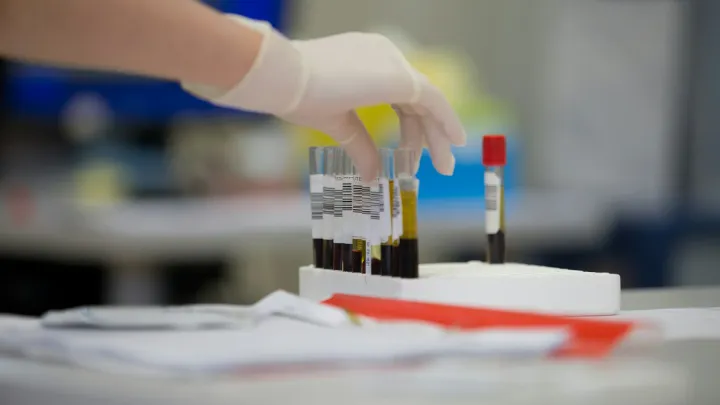
Yes, but you are unlikely to be offered it. NIDDK says doctors may not test for insulin resistance, because the test is used mainly in research studies. They look for prediabetes instead, with blood tests that measure your sugar.1 The US study above used HOMA-IR, a score worked out from fasting insulin and fasting glucose, and counted 2.5 or more as insulin resistance.2
These are the tests and ranges NIDDK gives for prediabetes:1
| Test | What it shows | Prediabetes range |
|---|---|---|
| HbA1c | Your average blood sugar over the past 3 months | 5.7% to 6.4% |
| Fasting plasma glucose | Your blood sugar at the time of the test | 100 to 125 mg/dL |
| Oral glucose tolerance test | Your blood sugar 2 hours after a sweet drink | 140 to 199 mg/dL |
HbA1c can miss prediabetes in people with certain health conditions.1 Doctors may suggest these tests from age 35, or earlier with overweight and other risk factors. With risk factors and a normal result, testing again at least every 3 years is the usual advice.1
What is the one-hour glucose test?
It is the same sweet-drink test, read after one hour instead of two. In 2024 the International Diabetes Federation said a one-hour reading of 155 mg/dL (8.6 mmol/L) or more, in people whose standard two-hour result is normal, strongly predicts type 2 diabetes, its complications and death in people with risk factors.3
A one-hour reading of 209 mg/dL (11.6 mmol/L) or more points to type 2 diabetes, to be confirmed with a repeat test. The federation’s case is that the one-hour mark catches the change earlier than the two-hour one, and finds people whose fasting sugar or HbA1c alone looks fine.3 It is a position statement, not yet the standard everywhere, and the federation asks each health service to decide how to screen with what it has.3
Can insulin resistance be reversed?
Often, yes. NIDDK says healthy living, meaning good food, physical activity, managing your weight and enough sleep, may help prevent or reverse insulin resistance and prediabetes.1
The best-known evidence is the Diabetes Prevention Program, a US trial of 3,234 adults with raised blood sugar. Its lifestyle group aimed to lose 7% of their weight and to be active for 150 minutes a week, and over about three years they developed diabetes 58% less often than the placebo group.6 If walking is how you move most, here is what 57 studies found about 10,000 steps a day.
If you already take medicine for your blood sugar, any change to it is for your doctor to decide.
Before your next blood test
- Check that HbA1c and fasting glucose are on the request
- Ask for the numbers, not only “normal”
- Tell your doctor if diabetes runs in your family or you had it in pregnancy
- Keep each result with its date, so a slow rise shows
- Ask when you should be tested again
Sources
- National Institute of Diabetes and Digestive and Kidney Diseases. Insulin Resistance & Prediabetes. niddk.nih.gov/health-information/diabetes/overview/what-is-diabetes/prediabetes-insulin-resistanceChecked 17 November 2026Back to the text
- Parcha V, Heindl B, Kalra R, et al. Insulin resistance and cardiometabolic risk profile among nondiabetic American young adults: insights from NHANES. Journal of Clinical Endocrinology & Metabolism. 2022;107(1):e25-e37. pubmed.ncbi.nlm.nih.gov/34473288/Checked 17 November 2026Back to the text
- Bergman M, Manco M, Satman I, et al. International Diabetes Federation position statement on the 1-hour post-load plasma glucose for the diagnosis of intermediate hyperglycaemia and type 2 diabetes. Diabetes Research and Clinical Practice. 2024;209:111589. pubmed.ncbi.nlm.nih.gov/38458916/Checked 17 November 2026Back to the text
- NHS. Acanthosis nigricans. nhs.uk/conditions/acanthosis-nigricans/Checked 17 November 2026Back to the text
- Mohieldein A, Baig HA, Elhabiby M, et al. Prediabetes in adult Saudis: a systematic review & meta-analysis of prevalence studies (2000-2024). PeerJ. 2025;13:e19778. pubmed.ncbi.nlm.nih.gov/40860675/Checked 17 November 2026Back to the text
- Diabetes Prevention Program Research Group (Knowler WC, et al.). Reduction in the incidence of type 2 diabetes with lifestyle intervention or metformin. New England Journal of Medicine. 2002;346(6):393-403. pubmed.ncbi.nlm.nih.gov/11832527/Checked 17 November 2026Back to the text
Photos: Sweet Life, B Y G, Testalize.me / Unsplash
This article is general information, not medical advice. For a question about your own health, your doctor or pharmacist is the right person to ask.