Hypothyroidism symptoms, and a TSH range that may not fit you
An underactive thyroid creeps in slowly. The symptoms to know, what a normal TSH is, and why one range for every age can mislabel older adults.

Most people who look up thyroid symptoms are trying to explain a tiredness that will not lift. An underactive thyroid is one possible reason, and a blood test can settle it. Here are the symptoms, what the numbers on the result mean, and why the same number can read differently at 30 and at 75.
What are the symptoms of an underactive thyroid?
The common ones are tiredness, feeling cold more than usual, weight gain, constipation, trouble concentrating, low mood, dry skin or hair, hair loss, a hoarse voice, and irregular or heavy periods. They usually come on slowly and get worse over time, so they are easy to miss at first.1
The US National Institute of Diabetes and Digestive and Kidney Diseases (NIDDK) adds joint and muscle pain and a slow heart rate, and says you may not notice the symptoms for months or even years.4 It also says that tiredness and weight gain are common and do not necessarily mean a thyroid problem.4 Tiredness has other causes too, and low iron is a common one: here is the iron shortage a normal blood count can miss.
Who gets hypothyroidism, and why?
Nearly 5 in 100 Americans aged 12 and over have hypothyroidism, though most cases are mild. Women are much more likely to have it than men, and it is more common after 60.4 In the UK the main cause is Hashimoto’s disease, in which the immune system attacks the thyroid. It is most common in women and usually starts between 30 and 50.1
Your chances are also higher if thyroid disease runs in your family, if you were pregnant in the past 6 months, or if you have type 1 or type 2 diabetes, coeliac disease, rheumatoid arthritis or lupus.4
An underactive thyroid can also raise cholesterol, and NIDDK says people with high cholesterol should be tested for it.4 Here is what your LDL cholesterol result means.
What is a normal TSH level?
TSH is the signal your pituitary gland sends to make the thyroid work, so it rises when the thyroid falls behind. The British Thyroid Foundation gives these typical adult ranges and says they vary from lab to lab:2
| Test | What it measures | Typical adult range |
|---|---|---|
| TSH | The pituitary’s signal to the thyroid | 0.4 to 4.0 mU/L |
| Free T4 | The main hormone the thyroid makes | 9.0 to 25.0 pmol/L |
| Free T3 | The active form of thyroid hormone | 3.5 to 7.8 pmol/L |
A high TSH with a low free T4 suggests an underactive thyroid. A slightly raised TSH with a normal free T4 is called subclinical hypothyroidism, a mild form that may or may not progress over many years.2 Ranges are different in pregnancy and for babies and young children.2
Does the normal TSH range change with age?
Yes, though most labs use one range for every adult. In a 2025 study of 8,308 US adults, the upper limit of TSH in healthy people rose with age. On the usual single range, mild hypothyroidism went from 2.4% of people in their 20s to 5.9% of those aged 70 and over.3
48.5%
of US adults with mild (subclinical) hypothyroidism were back in the normal range once age, sex and race were taken into account.
Li and colleagues, Annals of Internal Medicine, 20253
A UK study followed the same 204 people, with an average age of 77, for about eight years. In that time the upper limit of their TSH rose from 4.74 to 6.28 mU/L. Read against the standard range, mild hypothyroidism went from 3.5% to 9.0% of them. Read against a range for their age at each visit, it was 2.0% both times.5
The authors put it plainly: “Thyroid function demonstrates subtle but significant changes with age.”5 What a mildly raised TSH means for an older person is a question for their doctor, who can read it with their age in mind.

What can affect a thyroid blood test?
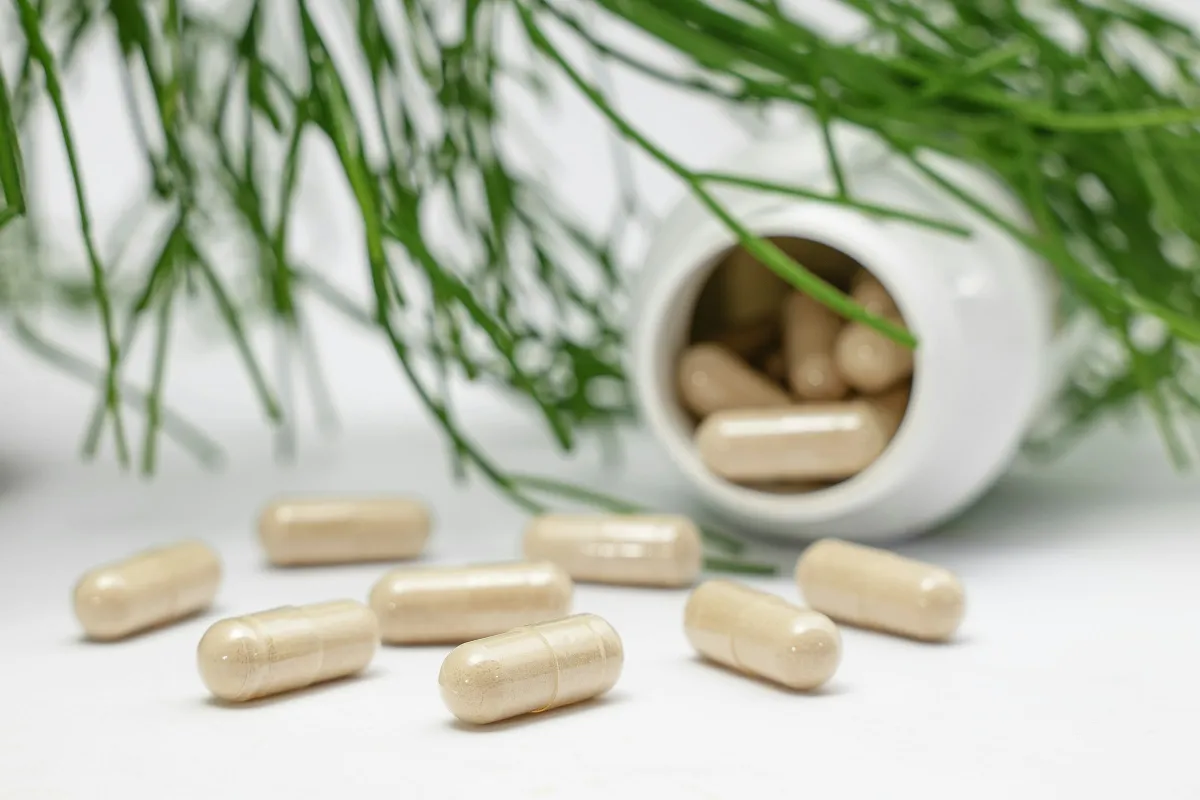
Serious illness, many medicines, and vitamin or mineral supplements, especially ones with iodine or biotin, can all change thyroid results. The British Thyroid Foundation asks you to tell the person taking your blood about all of them.2
In a 2017 study, six healthy adults took biotin for a week at a dose common in over-the-counter supplements. It threw off 9 of the 23 lab tests that use biotin in their chemistry, including thyroid tests, with some reading falsely high and others falsely low.6 The US Food and Drug Administration warns that biotin in supplements can cause wrong results that may go unnoticed.7
When should you get a thyroid test?
The British Thyroid Foundation suggests asking your GP for one if you have symptoms of an under- or overactive thyroid, a swelling in your neck, an irregular or fast heart rate, high cholesterol, osteoporosis, fertility or period problems, or a family history of autoimmune conditions such as type 1 diabetes.2
It also suggests a test if you feel unwell after having a baby, or if you are planning a pregnancy or in early pregnancy with a personal or family history of thyroid problems.2 A diagnosis rests on the blood test, read together with how you feel.2
Before your thyroid test
- Ask for TSH and free T4, with the numbers
- Tell the person taking your blood about every supplement, especially biotin or iodine
- Mention your medicines and any recent illness
- If you are older, ask whether your age was taken into account
- Keep each result with its date and the lab’s range
Sources
- NHS. Underactive thyroid (hypothyroidism). nhs.uk/conditions/underactive-thyroid-hypothyroidism/Checked 17 November 2026Back to the text
- British Thyroid Foundation. Thyroid function tests. btf-thyroid.org/thyroid-function-testsChecked 17 November 2026Back to the text
- Li Q, Tang Y, Yu X, et al. Thyroid function reference intervals by age, sex, and race: a cross-sectional study. Annals of Internal Medicine. 2025;178(7):921-929. pubmed.ncbi.nlm.nih.gov/40324200/Checked 17 November 2026Back to the text
- National Institute of Diabetes and Digestive and Kidney Diseases. Hypothyroidism (Underactive Thyroid). niddk.nih.gov/health-information/endocrine-diseases/hypothyroidismChecked 17 November 2026Back to the text
- Razvi SS, Wild H, Ingoe L, et al. Changes in thyroid function and autoimmunity in older individuals: longitudinal analysis of the Whickham cohort. Journal of Clinical Endocrinology & Metabolism. 2025;110(9):e3078-e3084. pubmed.ncbi.nlm.nih.gov/39673773/Checked 17 November 2026Back to the text
- Li D, Radulescu A, Shrestha RT, et al. Association of biotin ingestion with performance of hormone and nonhormone assays in healthy adults. JAMA. 2017;318(12):1150-1160. pubmed.ncbi.nlm.nih.gov/28973622/Checked 17 November 2026Back to the text
- US Food and Drug Administration. Biotin interference with troponin lab tests: assays subject to biotin interference. fda.gov/medical-devices/in-vitro-diagnostics/biotin-interference-troponin-lab-tests-assays-subject-biotin-interferenceChecked 17 November 2026Back to the text
Photos: Anita Jankovic, Land O’Lakes, Inc., Supliful / Unsplash
This article is general information, not medical advice. For a question about your own health, your doctor or pharmacist is the right person to ask.