Collagen supplements: what 23 trials found, and who paid
A 2025 review of 23 trials found collagen helped skin only in industry-funded studies. Here is what the independent trials show, and what works instead.
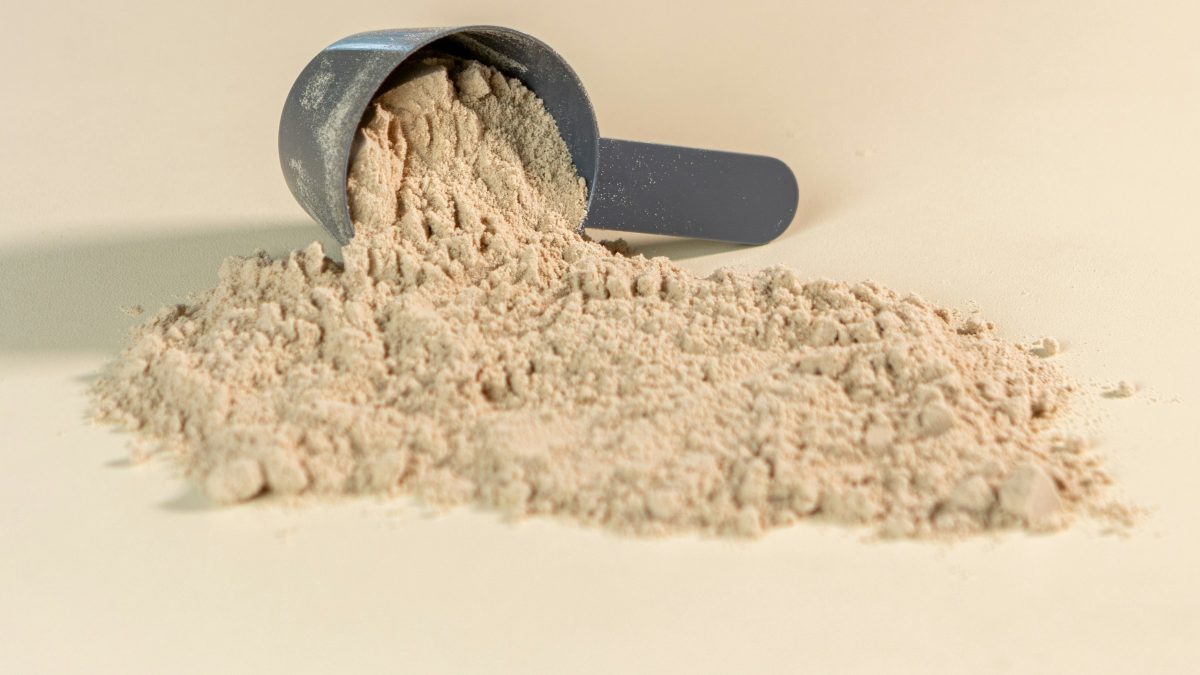
Collagen is stirred into morning coffee, pressed into gummies and sold in tubs promising firmer skin by summer. Most of the studies behind those promises are real and randomised. The newest review of them asks a question the earlier ones skipped: who paid for each trial, and does the answer change the result? It does, completely.
Do collagen supplements work for skin?
On the best evidence we have, there is no clear sign that they do. A 2025 review of 23 randomised trials found better hydration, elasticity and wrinkles when every trial was counted. Once the authors looked only at trials without company funding, or only at high-quality trials, the benefit was gone.1
The review, by Seung-Kwon Myung and Yunseo Park in The American Journal of Medicine, searched three medical databases up to June 2024 and pooled 1,474 participants. It was the first to split the trials by who funded them and by how well they were run.1
| Trials counted | Hydration | Elasticity | Wrinkles |
|---|---|---|---|
| All 23 | Improved | Improved | Improved |
| Funded by companies | Improved | Improved | Improved |
| Not funded by companies | No effect | No effect | No effect |
| High quality | No effect | No effect | No effect |
Their conclusion is plain: “There is currently no clinical evidence to support the use of collagen supplements to prevent or treat skin aging.”1
23 trials
When the trials paid for by companies were set aside, collagen’s effect on hydration, elasticity and wrinkles disappeared.
Myung and Park, The American Journal of Medicine, 20251

Why did earlier reviews say collagen works?
Because they pooled the same kind of small trials without sorting them by funding or quality. A 2021 review of 19 trials, with 1,125 people aged 20 to 70 and 95% of them women, concluded that hydrolysed collagen taken for 90 days reduces wrinkles and improves elasticity and hydration.2
The two reviews asked different questions. Pool every trial and the industry studies, which tend to be positive, carry the result. Look at them apart and a pattern appears that usually means the early findings were weaker than they looked. One review does not close the matter, and a large trial paid for by nobody with a product to sell would settle it far better than another pooling of small ones.
What is collagen, and what happens when you swallow it?
Collagen is the most abundant protein in your body, the scaffolding of skin, tendons and bone. Supplements are sold as collagen peptides or hydrolysed collagen, forms already broken down so they absorb more easily.4
Your gut does not send collagen to your face intact. Harvard’s School of Public Health explains that it is broken down into amino acids, which are then sent wherever the body most needs protein.4 Your body builds its own collagen from amino acids such as glycine, proline and hydroxyproline, found in protein-rich foods, and it needs vitamin C and zinc to do it.4
Is collagen safe to take?
For most healthy people collagen is simply a food protein. What you cannot count on is that a tub holds exactly what its label says. In the US, the FDA does not have the authority to approve dietary supplements for safety and effectiveness before they are sold.5
Collagen is made from animal parts, usually from cows, pigs or fish. If you avoid pork or have a fish allergy, the source on the label matters more than any claim on the front.
What actually slows skin ageing?
Sunscreen, worn every day. In a trial in Australia, 903 adults under 55 were split between daily sunscreen and using it when they felt like it. After four and a half years the daily group showed no detectable increase in skin ageing, and their skin aged 24% less than the other group’s.3
The same trial tested a supplement too. Beta-carotene, an antioxidant taken as a supplement, had no overall effect on skin ageing.3

Food helps your body make collagen in the ordinary way. Vitamin C comes from citrus fruit, berries, leafy greens, peppers and tomatoes, and zinc from shellfish, legumes, meat, nuts, seeds and whole grains.4
Before you spend on collagen
- Ask who funded the study a brand quotes
- Check the animal source on the label
- Compare the price per gram with ordinary protein
- Wear a broad-spectrum sunscreen every day
- Eat vitamin C and zinc foods most days
Is collagen worth the money?
If you take it for your skin, the independent trials give you little reason to keep paying for it. If you enjoy it in your coffee and treat it as protein, there is no harm in that for most people. Either way, the choice is yours, and you can now make it knowing what the independent trials found.
Sources
- Myung SK, Park Y. Effects of collagen supplements on skin aging: a systematic review and meta-analysis of randomized controlled trials. The American Journal of Medicine. 2025;138(9):1264-1277. pubmed.ncbi.nlm.nih.gov/40324552/Checked 16 November 2026Back to the text
- de Miranda RB, Weimer P, Rossi RC. Effects of hydrolyzed collagen supplementation on skin aging: a systematic review and meta-analysis. International Journal of Dermatology. 2021;60(12):1449-1461. pubmed.ncbi.nlm.nih.gov/33742704/Checked 16 November 2026Back to the text
- Hughes MC, Williams GM, Baker P, Green AC. Sunscreen and prevention of skin aging: a randomized trial. Annals of Internal Medicine. 2013;158(11):781-790. pubmed.ncbi.nlm.nih.gov/23732711/Checked 16 November 2026Back to the text
- Harvard T.H. Chan School of Public Health, The Nutrition Source. Collagen. nutritionsource.hsph.harvard.edu/collagen/Checked 16 November 2026Back to the text
- US Food and Drug Administration. FDA 101: Dietary supplements. fda.gov/consumers/consumer-updates/fda-101-dietary-supplementsChecked 16 November 2026Back to the text
Photos: Alex Saks, Klara Kulikova, Chad Madden / Unsplash
This article is general information, not medical advice. For a question about your own health, your doctor or pharmacist is the right person to ask.