Mineral vs chemical sunscreen: is either one bad for you?
What the FDA says about mineral and chemical filters, why 16 of 20 SPF 50 sunscreens missed their label in a 2025 test, and what daily use does to vitamin D.

Sunscreen is the skincare habit with the strongest trials behind it, and the one people argue about most: mineral or chemical, 30 or 50, and whether anything on the label can be trusted. The answers are in a handful of trials and one regulator’s review, and none of them say to stop wearing it.
Mineral vs chemical sunscreen: what is the difference?
Mineral sunscreens protect with zinc oxide or titanium dioxide. Chemical sunscreens use filters such as avobenzone, oxybenzone, octocrylene and homosalate. In 2021 the US Food and Drug Administration proposed that only zinc oxide and titanium dioxide, at up to 25%, be recognised as safe and effective on the evidence it had. For 12 chemical filters it asked manufacturers for more safety data.1
The FDA is clear that asking for data is not a verdict. Its proposal, in its own words, “does not represent a conclusion by the FDA that the sunscreen active ingredients proposed as having insufficient data are unsafe”.1 In June 2026 it added a newer filter, bemotrizinol, to the approved list, and in September 2026 it removed PABA and trolamine salicylate, which it says no sunscreen sold in the US still contains.1
Is sunscreen absorbed into your blood?
Chemical filters are. In a 2020 FDA trial, 48 healthy adults applied one of four sunscreens to three quarters of the body, up to four times a day, for four days. All six filters tested passed into the blood above the level at which the FDA can waive some safety studies, and all six did it on the first day.2
Above that level, the FDA wants more studies before it calls a filter safe. The level is not a sign of harm, and the researchers wrote that their findings “do not indicate that individuals should refrain from the use of sunscreen”.2 The most common side effect in the trial was a rash, in 14 of the 48.2 If you would rather wait for those answers, a mineral sunscreen avoids the question.
Does sunscreen prevent skin ageing and skin cancer?
Yes, in the trials that tested it over years. In Nambour, Australia, 903 adults under 55 used sunscreen daily or when they chose to. After four and a half years the daily group’s skin had aged 24% less.5
The same town’s trial followed 1,621 adults for ten years after it ended. The daily sunscreen group had 11 new melanomas and the comparison group 22.6 The numbers are small and the difference fell just short of the usual bar for certainty, though invasive melanomas fell more clearly, 3 against 11. The authors concluded that melanoma “may be preventable by regular sunscreen use in adults”.6
Darker skin needs protecting too, not only from burning. In a 2026 trial of 20 adults with medium to dark skin, visible light and ultraviolet rays deepened dark marks left by irritation, and skin under a sunscreen with niacinamide darkened far less than unprotected skin. Four of the six authors work for the company that makes it, and the other two advise it.7 Here is what niacinamide does for dark spots on its own.
SPF 30 vs 50: can you trust the number?
Not always. In 2025 the Australian consumer group CHOICE sent 20 popular sunscreens labelled SPF 50 or 50+ to an accredited lab. Sixteen fell short, and the lowest tested at SPF 4. A second lab in Germany, testing another batch, measured SPF 5.3
16 of 20
sunscreens labelled SPF 50 or 50+ did not reach their claimed SPF in a 2025 lab test. Seven measured in the 20s.
CHOICE, June 20253
CHOICE’s chief executive added that “a sunscreen with an SPF of 30 or even 20 still offers a significant amount of sunscreen protection, and any sunscreen is better than none at all”.3 Several of the low results came from zinc sunscreens, so mineral is not a promise of a higher SPF.
The NHS advises at least SPF 30 for UVB and a UVA rating of at least four stars, or the letters UVA in a circle.4 The number on the label also assumes a generous layer, and the NHS warns that a thin one gives less protection.4
How much sunscreen should you use, and does it expire?
More than most people think. The NHS suggests around six to eight teaspoons to cover an adult’s whole body. Put it on 30 minutes before you go out and again just before, then every two hours and straight after swimming or towelling dry, even if the bottle says water resistant.4
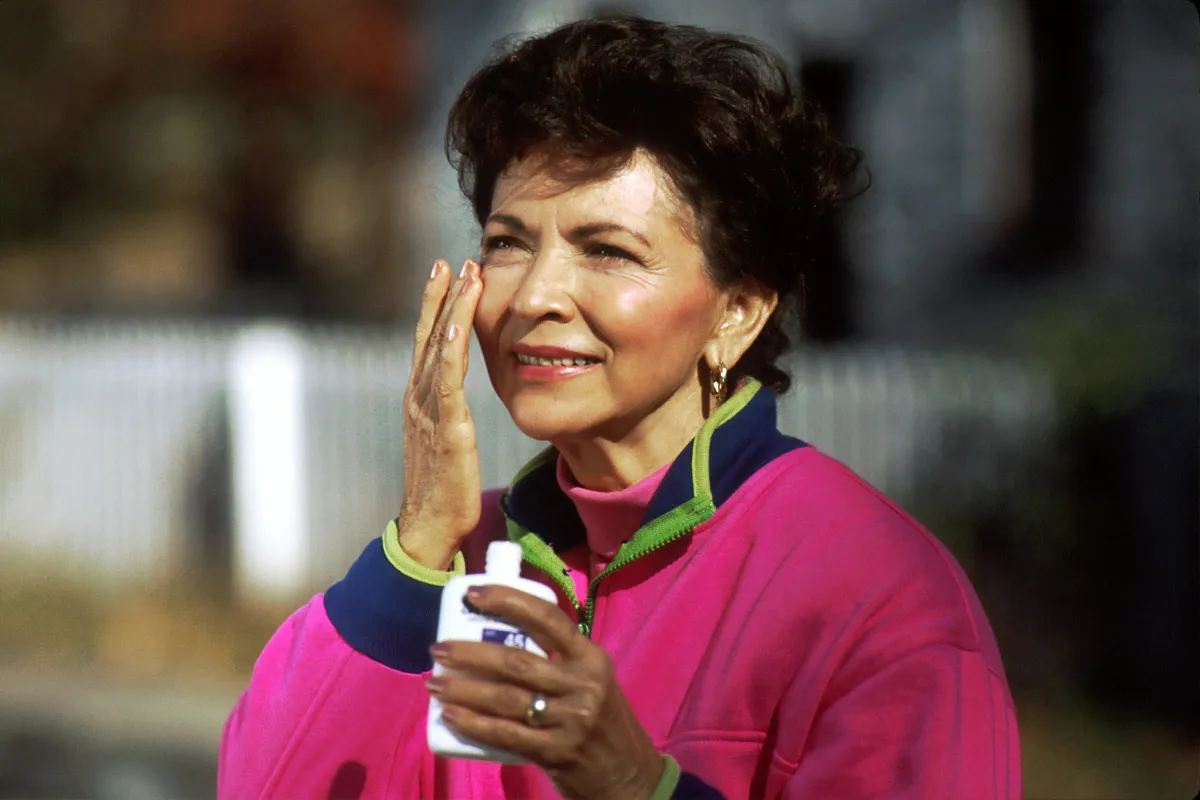
Sunscreen does expire. Look for the expiry date, and for the open jar symbol with a number and the letter M, which shows how many months it lasts once opened.4 The NHS adds one more rule: do not stay in the sun longer than you would without it.4
Does sunscreen cause vitamin D deficiency?
High SPF used every sunny day may, according to the newest trial. Older trials of SPF 16 sunscreen found no effect on vitamin D.8 Then the Sun-D trial in Australia asked 639 adults to wear SPF 50+ on every day the UV index was forecast to reach 3 or more, or to use sunscreen as they liked, for about a year. At the end, 45.7% of the daily group were low in vitamin D, against 36.9% of the others.9

The authors still recommend regular sunscreen, and say daily users may need a vitamin D test or a supplement.9 Whether you do is a question for your doctor, and a blood test can answer it. Here are the symptoms of low vitamin D, and when the test is worth having.
Before you buy your next sunscreen
- Look for SPF 30 or higher and four or five UVA stars, or UVA in a circle
- Choose zinc oxide or titanium dioxide if you would rather avoid filters still under FDA review
- Use enough: about six to eight teaspoons for the whole body
- Reapply every two hours and after swimming or towelling
- Check the open jar symbol for how many months it lasts once opened
- Ask your doctor about a vitamin D test if you wear sunscreen every day
Sources
- US Food and Drug Administration. Questions and answers: FDA posts deemed final order and proposed order for over-the-counter sunscreen. Updated September 2026. fda.gov/drugs/understanding-over-counter-medicines/questions-and-answers-fda-posts-deemed-final-order-and-proposed-order-over-counter-sunscreenChecked 18 November 2026Back to the text
- Matta MK, Florian J, Zusterzeel R, et al. Effect of sunscreen application on plasma concentration of sunscreen active ingredients: a randomized clinical trial. JAMA. 2020;323(3):256-267. pubmed.ncbi.nlm.nih.gov/31961417/Checked 18 November 2026Back to the text
- CHOICE. 16 of 20 sunscreens didn’t meet SPF claims in CHOICE test. Media release, 12 June 2025. choice.com.au/about-us/media/media-releases/2025/june/16-of-20-sunscreens-didntChecked 18 November 2026Back to the text
- NHS. Sunscreen and sun safety. nhs.uk/live-well/seasonal-health/sunscreen-and-sun-safety/Checked 18 November 2026Back to the text
- Hughes MC, Williams GM, Baker P, Green AC. Sunscreen and prevention of skin aging: a randomized trial. Annals of Internal Medicine. 2013;158(11):781-790. pubmed.ncbi.nlm.nih.gov/23732711/Checked 18 November 2026Back to the text
- Green AC, Williams GM, Logan V, Strutton GM. Reduced melanoma after regular sunscreen use: randomized trial follow-up. Journal of Clinical Oncology. 2011;29(3):257-263. pubmed.ncbi.nlm.nih.gov/21135266/Checked 18 November 2026Back to the text
- Passeron T, Brown A, Furmanczyk M, et al. An investigator-blinded, randomized trial of a broad-spectrum sunscreen containing sclareolide and niacinamide for the prevention of post-inflammatory hyperpigmentation in skin of color. Dermatology and Therapy. 2026;16(1):405-421. pubmed.ncbi.nlm.nih.gov/41240206/Checked 18 November 2026Back to the text
- Neale RE, Khan SR, Lucas RM, et al. The effect of sunscreen on vitamin D: a review. British Journal of Dermatology. 2019;181(5):907-915. pubmed.ncbi.nlm.nih.gov/30945275/Checked 18 November 2026Back to the text
- Tran V, Duarte Romero BL, Andersen H, et al. Effect of daily sunscreen application on vitamin D: findings from the open-label randomized controlled Sun-D Trial. British Journal of Dermatology. 2025;193(6):1128-1137. pubmed.ncbi.nlm.nih.gov/40927943/Checked 18 November 2026Back to the text
Photos: Onela Ymeri, National Cancer Institute, jo rhn / Unsplash
This article is general information, not medical advice. For a question about your own health, your doctor or pharmacist is the right person to ask.